
Your beard deserves more than guesswork. Every morning, you apply products to your face without understanding what separates effective formulations from expensive placebos. The difference between a good beard balm and a mediocre one lies in specific, measurable scientific principles-not marketing hype. This guide dissects the biology, chemistry, and application techniques that transform unruly facial hair into a well-conditioned, styled asset.
The Problem: Why Most Beard Products Fail Your Facial Hair
Walk into any grooming shop, and you'll face shelves packed with beard balms making identical promises. Yet most contain synthetic fragrances, petroleum derivatives, and filler ingredients that coat rather than condition.
Your beard hair differs structurally from scalp hair. Facial hair grows thicker (approximately 0.3mm in diameter versus 0.1mm for head hair), contains less moisture, and emerges from follicles surrounded by more sebaceous glands. This unique biology demands targeted intervention.
The Hidden Damage You're Inflicting Daily
Environmental factors assault your beard relentlessly:
- UV radiation breaks down keratin protein chains, weakening hair structure
- Wind exposure lifts the cuticle layer, creating roughness and split ends
- Central heating evaporates moisture from the hair shaft, causing brittleness
- Hard water minerals deposit calcium and magnesium, creating stiffness
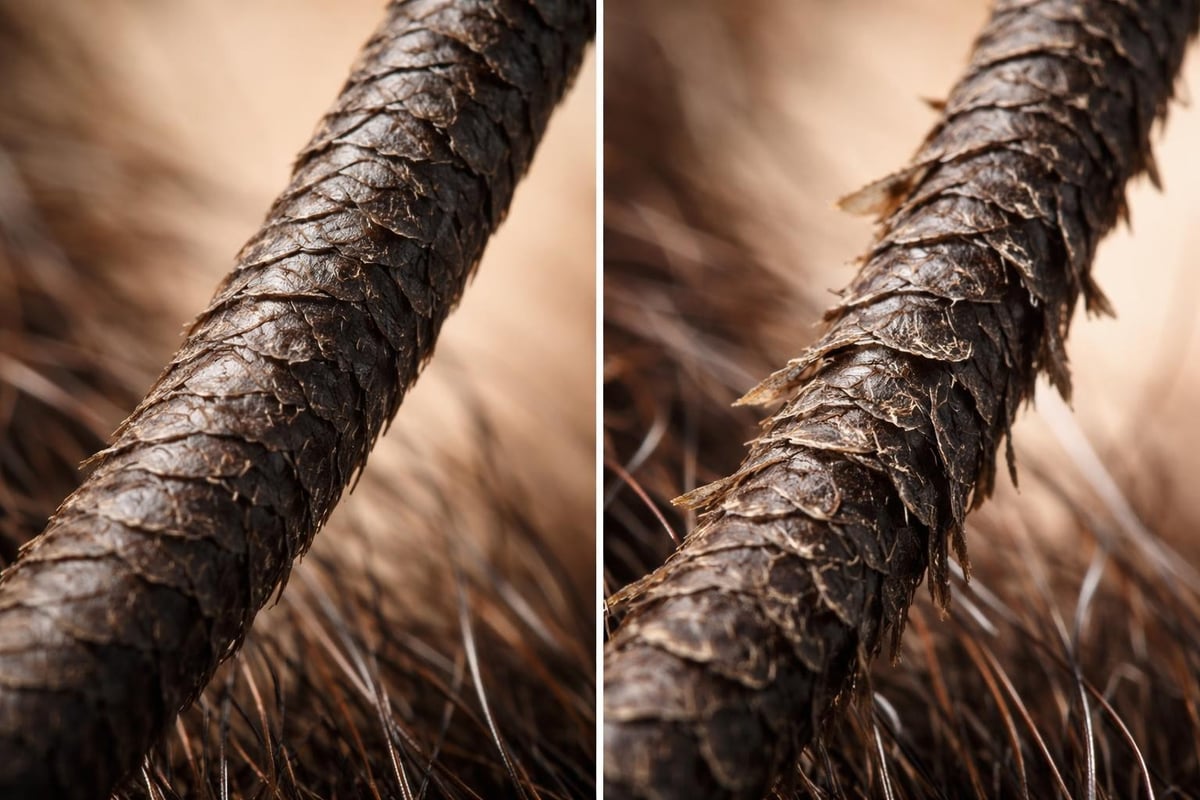
Without protective intervention, your beard becomes progressively damaged. The cuticle layer-overlapping cells that protect the cortex-begins to separate. Once this protective barrier deteriorates, the cortical cells beneath start breaking down.
What Defines a Good Beard Balm: The Scientific Criteria
A good beard balm functions as a multi-phase delivery system. It must provide immediate styling hold whilst simultaneously penetrating the hair shaft to deliver conditioning agents. This dual functionality requires precise formulation balance.
The Essential Component Trio
| Component Type | Primary Function | Active Mechanism |
|---|---|---|
| Butter (Shea/Cocoa) | Deep conditioning | Fatty acids penetrate cortex, filling protein gaps |
| Wax (Beeswax/Candelilla) | Hold and protection | Creates hydrophobic barrier on cuticle surface |
| Carrier Oils (Jojoba/Argan) | Moisture delivery | Mimics sebum, regulates moisture balance |
Butters contain high concentrations of fatty acids-particularly oleic acid (omega-9) and stearic acid. These molecules are small enough to penetrate between cuticle scales, reaching the cortical layer where they bind to keratin proteins. Research from Healthline confirms that these lipid molecules fill microscopic gaps in damaged hair structure, restoring elasticity and strength.
Waxes perform a different function entirely. Beeswax contains approximately 40% hydrocarbons, 35% esters, and 12% free fatty acids. When warmed between your palms and applied, these compounds coat the hair shaft's exterior, creating a protective hydrophobic (water-repelling) layer that shields against moisture loss and environmental damage.
The Molecular Penetration Hierarchy
Not all ingredients penetrate equally. Molecular weight determines absorption depth:
- Lightweight oils (Jojoba, Argan): 400-500 Daltons, penetrate to cortex
- Medium-weight butters (Shea, Cocoa): 600-800 Daltons, penetrate upper cortex
- Heavy waxes (Beeswax): 1000+ Daltons, remain on cuticle surface
A good beard balm strategically combines all three weight classes, ensuring both surface protection and deep conditioning. Products containing only waxes provide hold without nourishment. Those with only oils condition but offer no styling capability.
Breaking Down Premium Ingredients vs. Cheap Fillers
The grooming industry exploits consumer ignorance. Reading ingredient lists reveals the truth about quality.
Red Flags That Signal Inferior Formulation
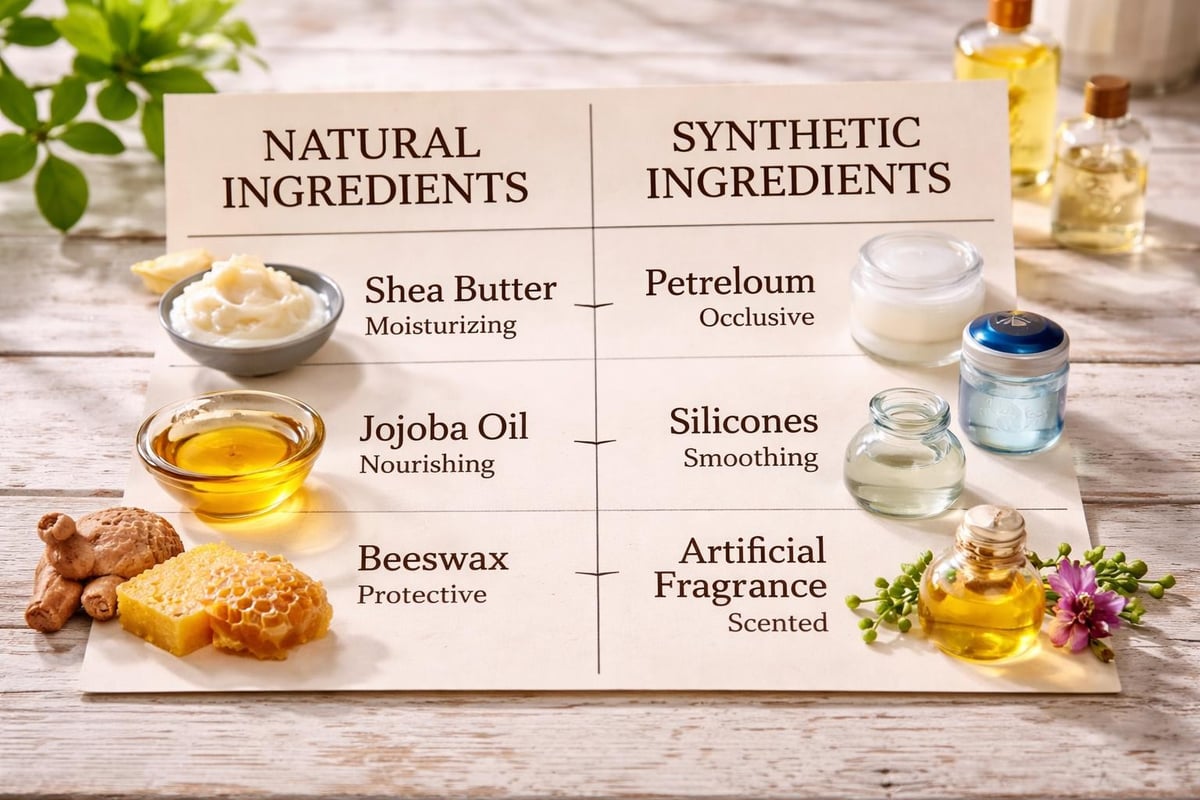
Petroleum derivatives (Petrolatum, Mineral Oil, Paraffin): These compounds create the illusion of conditioning through surface coating. They're occlusive-blocking moisture transfer without actually hydrating. Over time, they prevent natural sebum from reaching hair shafts, creating dependency.
Synthetic fragrances (listed as "Parfum" or "Fragrance"): These compounds contain phthalates and hormone disruptors. They offer zero functional benefit whilst introducing allergens and irritants.
Silicones (Dimethicone, Cyclomethicone): These create temporary smoothness by filling gaps with synthetic polymers. They build up over time, requiring harsh sulfates for removal-a damaging cycle.
Premium Natural Alternatives and Their Mechanisms
Understanding what makes natural beard balm formulations superior requires examining specific ingredient functions.
Shea Butter: Contains triterpene alcohols (lupeol, parkeol, butyrospermol) that reduce inflammatory compounds in skin beneath your beard. The fatty acid profile-predominantly oleic (40-55%) and stearic (35-45%)-matches sebum composition closely, allowing seamless integration with natural oils.
Jojoba Oil: Technically a liquid wax ester, not an oil. Its molecular structure nearly identically matches human sebum. This biomimicry allows it to regulate sebum production-moisturising dry areas whilst reducing excess production in oily zones.
Beeswax: Provides vitamin A (essential for cell regeneration), natural antibacterial properties from propolis residue, and a melting point (62-64°C) that softens with body heat for easy application yet holds firmly at ambient temperature.
Application Technique: Where Most Users Sabotage Results
Owning a good beard balm means nothing if application technique undermines its effectiveness. The science of optimal absorption dictates specific protocols.
The Temperature-Activation Protocol
Beard balm requires thermal activation. Waxes remain solid at room temperature-their molecules locked in rigid crystalline structures. Heat disrupts these structures, creating fluidity for even distribution.
Step-by-step activation process:
- Extract a thumbnail-sized amount (approximately 0.5-1g depending on beard length)
- Rub vigorously between palms for 30-45 seconds until completely liquefied
- Temperature should reach 35-37°C (body temperature), indicated by transparent, oily consistency
- If balm remains cloudy or contains solid particles, continue warming
Insufficient warming creates uneven application. Solid wax particles deposit in clumps, leaving some areas over-conditioned whilst others receive no coverage.
The Directional Application Matrix
Hair cuticles overlap like roof tiles, running from root to tip. Applying against this grain (tip to root) lifts cuticle scales, creating roughness and frizz. With-grain application smooths scales flat, maximising shine and manageability.
| Application Zone | Direction | Rationale |
|---|---|---|
| Cheek area | Downward, root to tip | Follows natural growth pattern, smooths cuticles |
| Moustache | Outward from centre | Separates hairs, prevents clumping |
| Chin/Soul patch | Downward | Aligns with gravity, prevents upward curl |
| Neckline | Upward, then downward | Distributes product, then sets direction |
After directional application, use a boar bristle brush. Natural bristles have microscopic scales that grip hair cuticles, redistributing product whilst further smoothing the cuticle layer. Synthetic brushes lack this texture, merely moving hair without conditioning benefit.
Timing Your Application for Maximum Absorption
Your beard's receptivity to conditioning products varies throughout the day based on moisture content and cuticle positioning.
The Post-Shower Advantage
Shower steam temporarily swells hair shafts, expanding spaces between cuticle scales by approximately 15-20%. This expansion creates channels for deeper ingredient penetration. Water molecules force cuticles to lift slightly, opening pathways to the cortex.
Apply a good beard balm within 3-5 minutes of showering, whilst hair retains 60-70% moisture content. The balm's hydrophobic waxes then seal this moisture inside as cuticles contract during drying.
Waiting longer than 10 minutes allows cuticles to close completely, reducing absorption by up to 40%. The difference becomes measurable-beards conditioned immediately post-shower show 3x more lipid retention after 8 hours compared to those conditioned on dry hair.
The Evening Repair Strategy
Nighttime offers unique conditioning advantages. During sleep, cell regeneration peaks as cortisol levels drop and growth hormone secretion increases. Applying conditioning products before bed maximises this repair window.
For intensive conditioning, consider dual-product protocols. Many grooming routines combine lighter daytime balms for styling with richer overnight treatments for deep repair.
Identifying Quality: What Separates Premium from Pretenders
Marketing claims mean nothing. Laboratory analysis reveals quality through measurable parameters.
The Texture Test Protocol
A good beard balm exhibits specific textural properties at room temperature (20-22°C):
- Firmness: Should resist finger pressure but yield without crumbling
- Melt point: Should begin softening at 28-30°C (slightly below skin temperature)
- Emulsion stability: Should not separate into oil and solid layers
- Absorption rate: Should absorb within 2-3 minutes, leaving minimal surface residue
Products too hard at room temperature contain excessive waxes, making application difficult. Those too soft contain insufficient wax, providing inadequate hold.
The Ingredient Ratio Mathematics
Professional formulations follow specific ratio ranges:
- Butters: 40-50% (primary conditioning agents)
- Waxes: 20-30% (hold and protection)
- Carrier oils: 20-30% (penetration enhancers)
- Essential oils: 1-3% (therapeutic benefits, not fragrance)
Brands hiding behind "proprietary blends" often use cheap fillers whilst charging premium prices. Transparent companies list ingredients in descending order by weight, allowing informed assessment.
Tailoring Selection to Your Specific Beard Type
Facial hair varies dramatically between individuals. Genetic factors determine thickness, curl pattern, density, and growth rate. A good beard balm for coarse, wiry hair differs fundamentally from formulations optimal for fine, straight beards.
The Beard Classification System
Type 1 (Straight, Fine): Hair diameter under 0.06mm, minimal natural curl. Requires lightweight formulations emphasising conditioning over hold. Excess wax weighs down fine hair, creating limpness.
Type 2 (Wavy, Medium): Hair diameter 0.06-0.08mm, gentle S-pattern curl. Benefits from balanced formulations with equal emphasis on conditioning and styling.
Type 3 (Curly, Coarse): Hair diameter 0.08-0.10mm, distinct spiral pattern. Demands butter-rich formulations for moisture retention. Understanding ingredients for specific textures helps optimise results.
Type 4 (Kinky, Very Coarse): Hair diameter over 0.10mm, tight Z-pattern curl. Requires maximum moisture from high-butter formulations with minimal wax to prevent stiffness.
Climate Adaptation Protocols
Environmental humidity dramatically affects beard balm performance. The same product behaves differently in Manchester (80% average humidity) versus desert climates (20% humidity).
High humidity environments: Wax content should increase to 30-35% to combat frizz from atmospheric moisture absorption. Reduce butter content slightly to prevent excessive softness.
Low humidity environments: Butter content should increase to 50-55% to compensate for environmental moisture depletion. Reduce wax to prevent brittleness.
The Growth Support Question: Separating Fact from Fiction
Does a good beard balm promote growth? This question generates persistent confusion, demanding scientific clarification.
What Balm Actually Does (And Doesn't Do)
Research examining beard balm's growth effects confirms a crucial distinction: balm doesn't stimulate follicle activity or increase growth rate. Your genetic programming determines how many follicles you possess and how rapidly they produce hair.
However, balm indirectly supports apparent growth through breakage prevention. Hair emerging from follicles at 0.4mm daily grows approximately 12mm monthly. If 3mm breaks off due to brittleness, net visible growth drops to 9mm-a 25% reduction.
Quality conditioning prevents this breakage. Fatty acids fill protein gaps, restoring tensile strength. A well-conditioned hair shaft withstands 30-40% more mechanical stress before fracturing.
The Comprehensive Growth Strategy
For those pursuing maximum beard development, balm functions as one component in a multi-factor protocol. The 90-Day Beard Challenge exemplifies this comprehensive approach, combining targeted formulations that address different growth aspects. The challenge includes a follicle-stimulating Beard Booster to enhance blood flow, a protective Hydro-Lock Balm to prevent environmental damage, and a pH-balanced shampoo to optimise scalp conditions for healthy growth.
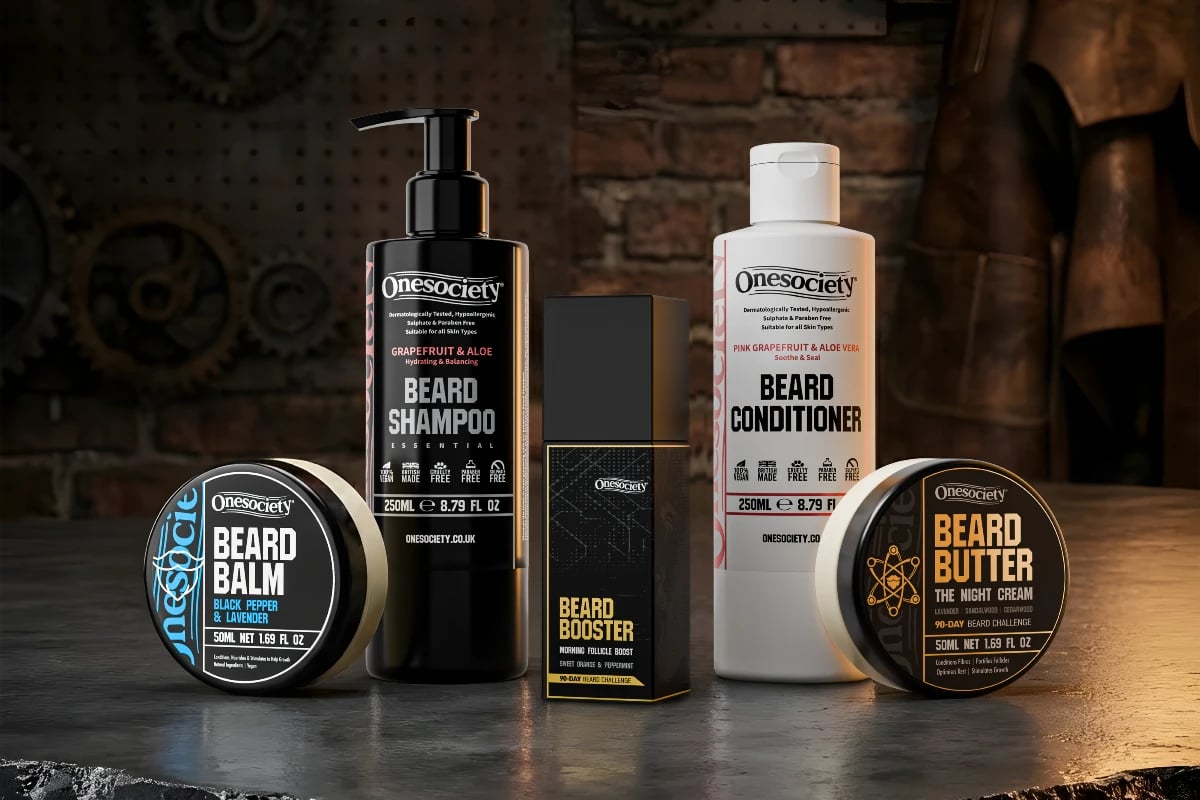
This systems-based methodology recognises that legendary beards emerge from consistent, science-backed care rather than singular miracle products.
Long-Term Maintenance: Building Cumulative Benefits
A good beard balm delivers immediate styling benefits whilst accumulating long-term structural improvements. Understanding this timeline helps set realistic expectations.
The 30-60-90 Day Transformation Timeline
Days 1-30 (Immediate Effects): Surface cuticle smoothing, enhanced shine, improved manageability. Wax coating provides instant frizz control. You'll notice easier styling and softer texture within the first week.
Days 31-60 (Structural Integration): Fatty acids penetrate deeper cortical layers, beginning to fill protein gaps from cumulative damage. Strength increases measurably-hair breaks less during combing. Split ends reduce as damaged sections receive reinforcement.
Days 61-90 (Regenerative Phase): Consistent conditioning allows natural growth to replace damaged sections. New growth emerges from optimally-nourished follicles, displaying superior diameter and strength. The beard achieves visual density as breakage approaches zero.
Storage and Preservation Protocols
Natural ingredients lack synthetic preservatives, making proper storage critical for maintaining efficacy.
Temperature control: Store between 15-22°C. Higher temperatures cause ingredient separation as lighter oils rise above heavier butters. Lower temperatures make balm difficult to scoop.
Light protection: UV radiation degrades vitamin E and other antioxidants. Opaque containers (tin, dark glass) preserve potency 3x longer than clear plastic.
Oxidation prevention: Exposure to oxygen triggers rancidity in fatty acids. Minimise container opening time. Purchase sizes you'll consume within 6-8 months for optimal freshness.
Integration with Complementary Products
A good beard balm excels when integrated with synergistic products rather than functioning in isolation.
The Layering Sequence for Maximum Effect
Morning protocol:
- Rinse beard with lukewarm water
- Apply lightweight beard oil to damp hair (2-3 drops for medium beards)
- Wait 2 minutes for absorption
- Apply beard balm for styling and additional protection
Oil penetrates deeper due to smaller molecular size. Applying balm over oil traps that lightweight conditioning inside whilst adding surface protection and hold.
Evening protocol:
- Wash with pH-balanced beard shampoo (2-3 times weekly maximum)
- Apply intensive conditioning treatment or butter
- Sleep without pillow contact to hair (or use silk pillowcase to reduce friction)
This dual-protocol approach separates styling from repair, optimising each product's specific strengths.
The Washing Frequency Paradox
Over-washing strips natural sebum, creating the dryness that necessitates heavy balm use. Under-washing allows dead skin accumulation, blocking follicles and creating beardruff.
Optimal frequency varies by individual sebum production, but most beards thrive on washing 2-3 times weekly with gentle, sulfate-free cleansers. Proper washing techniques preserve natural oils whilst removing debris and product buildup.
Advanced Selection: Reading Between Marketing Lines
Premium pricing doesn't guarantee quality. Conversely, budget products occasionally deliver exceptional value. Critical evaluation skills separate informed consumers from marketing victims.
The Certification Verification Process
Claims like "organic," "natural," and "cruelty-free" carry legal definitions in some jurisdictions whilst remaining meaningless marketing terms elsewhere.
Legitimate certifications to seek:
- Soil Association Organic (UK standard)
- USDA Organic (US standard)
- Leaping Bunny (cruelty-free verification)
- Vegan Society Trademark (no animal ingredients)
Products displaying these certifications undergo third-party auditing. Self-proclaimed "natural" products without certification often contain synthetic ingredients in quantities below disclosure thresholds.
The Transparency Hierarchy
Trustworthy brands demonstrate transparency through specific behaviours:
- Full ingredient disclosure: Listing every component in descending weight order
- Sourcing information: Naming supplier countries for primary ingredients
- Manufacturing details: UK/EU manufacture indicates regulatory compliance
- Testing documentation: Third-party laboratory analysis confirming purity claims
- Realistic claims: Avoiding magical promises (instant growth, miracle cures)
Brands hiding behind vague language ("proprietary blend," "secret formula") typically conceal inferior ingredients or misleading ratios.
Troubleshooting Common Application Issues
Even with a good beard balm, technique errors create suboptimal results. Understanding common pitfalls enables correction.
Problem: Balm Won't Absorb, Leaves Greasy Residue
Root causes:
- Excessive application quantity (more doesn't equal better)
- Insufficient emulsification (inadequate palm warming)
- Applying to wet rather than damp hair (water blocks oil absorption)
Solution protocol: Halve your typical amount. Warm for 45 seconds until completely transparent. Pat beard with towel to remove excess water before application.
Problem: Beard Feels Stiff or Crunchy
Root causes:
- Excessive wax content in formulation
- Applying to completely dry hair (wax hardens before distribution)
- Using styling balm when conditioning balm needed
Solution protocol: Switch to butter-rich formulation for your beard type. Ensure hair retains slight dampness during application. Consider separate styling and conditioning products.
Problem: No Visible Improvement After Weeks of Use
Root causes:
- Using petroleum-based products that coat without conditioning
- Insufficient quantity for beard length/density
- Incompatible formulation for hair type
- Washing too frequently, stripping applied product
Solution protocol: Verify ingredient quality (no petrolatum/mineral oil). Increase application amount by 50%. Match product to beard classification. Reduce washing to 2x weekly maximum.
Mastering beard care transforms your grooming routine from guesswork into precision. The science behind a good beard balm reveals that quality ingredients, proper application technique, and consistent use deliver measurable improvements in texture, strength, and appearance. Whether you're battling environmental damage, seeking better styling control, or pursuing maximum growth potential, understanding these principles empowers informed product selection. Onesociety provides scientifically-formulated grooming solutions backed by natural ingredients and transparent testing, helping you achieve the healthy, well-conditioned beard you've worked to grow.