
Your beard deserves precision engineering. The babyliss beard trim represents a pivotal moment in your grooming routine, where technical specification meets aesthetic vision. Yet most men approach trimming with guesswork rather than methodology, resulting in uneven lengths, patchy coverage, and irritated skin. Understanding the science behind effective beard trimming transforms this daily ritual from a mundane task into a strategic investment in your appearance and follicle health.
Why Your BaByliss Beard Trim Demands Scientific Precision
The human hair follicle operates on a specific growth cycle: anagen (growth), catagen (transition), and telogen (rest). When you execute a babyliss beard trim incorrectly, you create micro-trauma to the hair shaft, leading to split ends that travel upward through capillary action. This structural damage compromises the cuticle layer, the outermost protective coating composed of overlapping keratin scales.
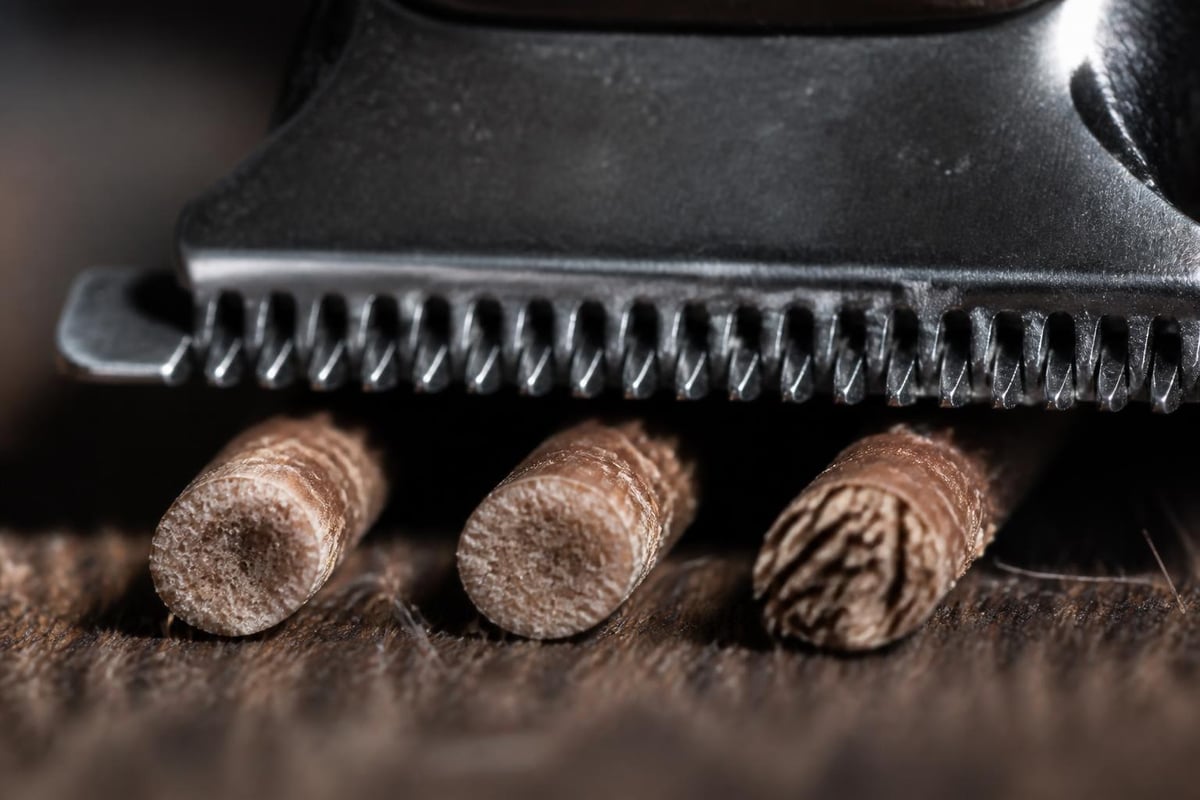
The BaByliss trimmer range addresses this through ceramic-coated blades that generate 30% less heat than traditional stainless steel alternatives. Excessive heat denatures keratin proteins at temperatures above 150°C, causing permanent structural changes to the hair's alpha-helix configuration. Ceramic maintains cooler operating temperatures, preserving protein integrity.
The Blade Geometry Problem
Most trimmers create compression stress on hair shafts before cutting. This mechanical stress causes longitudinal splitting that begins at the cut site and propagates through the hair over subsequent weeks. BaByliss models employ precision-ground blades at 45-degree angles, creating clean transverse cuts that minimise splitting.
The blade gap matters significantly. Research demonstrates that gaps exceeding 0.5mm create pulling force rather than cutting action, yanking hair from follicles and triggering inflammatory responses in the dermal papilla.
Preparing Your Beard for Optimal BaByliss Trim Results
Hydration status directly impacts cutting efficiency. Dry hair exhibits increased tensile strength, requiring 25% more force to cut cleanly. This additional force translates to vibration transfer through your trimmer, reducing control precision and increasing the likelihood of uneven results.
Pre-trim preparation activates three biological systems:
- Sebaceous gland stimulation: Massaging beard oil into follicles triggers mechanoreceptors that signal increased sebum production
- Cuticle expansion: Warm water causes keratin scales to lift slightly, creating smoother blade passage
- Blood flow optimization: Gentle exfoliation removes dead skin cells that obstruct follicle openings, improving circulation by up to 40%
The science behind this preparation traces to dermal papilla function. This structure at the follicle base receives nutrients through capillary networks. Enhanced blood flow delivers oxygen and amino acids essential for healthy hair production. When you combine proper preparation with a precision babyliss beard trim, you create conditions for optimal regrowth.
The Three-Stage Preparation Protocol
- Cleanse with pH-balanced formulation (5 minutes before trimming)
- Apply natural oils containing oleic acid (2-3 minutes for absorption)
- Comb in growth direction to identify grain patterns (reveals cutting angles)
This sequence primes hair shafts for clean cutting whilst protecting the underlying epidermis from mechanical irritation. The oleic acid in quality beard oils (typically 55-80% composition in products from premium suppliers) creates a microscopic lubrication layer that reduces friction coefficient by approximately 35%.
Mastering Length Settings and Guard Selection
The BaByliss beard trim system operates on millimetre increments, but your facial architecture demands customised application. The mandibular angle (jawline corner) requires different length treatment than the mental protuberance (chin point) to create visual symmetry.
Professional barbers employ the golden ratio principle: the distance from your lower lip to chin bottom should equal 1.618 times the distance from chin bottom to jaw angle. Achieving this proportion requires strategic guard selection across facial zones.
| Facial Zone | Recommended Length | Scientific Rationale |
|---|---|---|
| Cheek line | 3-6mm | Reduces visual weight, enhances cheekbone definition |
| Moustache connector | 6-9mm | Creates transition gradient, prevents harsh lines |
| Chin focal point | 9-15mm | Provides visual anchor, elongates face shape |
| Neck boundary | 1-3mm | Defines clean edge, prevents shadow appearance |
The expert trimming techniques recommended by professional groomers emphasise working against the grain for length reduction, then with the grain for refinement passes. This two-phase approach addresses the hair's natural tendency to lay flat under pressure.
Your trimmer's motor speed influences cut quality. BaByliss models operating at 7,000+ oscillations per minute create smoother cuts than lower-speed alternatives. The rapid blade movement reduces the duration of contact with each hair shaft, minimising heat transfer and mechanical stress.
Addressing Common BaByliss Beard Trim Failures
The primary failure mode occurs at the cheek line, where most men create unnaturally low boundaries. The anatomically correct cheek line follows the zygomatic arch (cheekbone) natural curve, typically 1-2cm above the point where beard density noticeably decreases.
Creating this line requires understanding your facial musculature. The buccinator muscle creates a natural depression that guides proper placement. Position your trimmer to follow this anatomical landmark rather than imposing an arbitrary straight line.
The Neckline Precision Problem
Problem: The neckline represents the most critical boundary in beard architecture. Positioning it incorrectly shrinks your jawline appearance and creates an unkempt impression despite overall grooming effort.
Agitation: Most men place the neckline at their actual jawbone, eliminating the visual definition between jaw and neck. This creates a "neckbeard" effect that adds apparent weight to the lower face whilst reducing perceived jaw strength. The positioning error stems from tilting your head backward during trimming, which distorts anatomical reference points.
Solution: Identify your Adam's apple, then place two fingers above it horizontally. This anatomical marker indicates your proper neckline placement for the babyliss beard trim boundary. The two-finger measurement corresponds to the hyoid bone position, the U-shaped structure that sits above your larynx. Trimming below this point removes essential visual support for your jawline definition.
The BaByliss trimmer models with LED guidance systems help maintain consistent angles during neckline creation. Inconsistent angles create wavering lines that become increasingly visible as hair grows between trims.

Synchronising Trim Frequency With Hair Growth Cycles
Your hair follicles don't operate on uniform schedules. The anagen phase lasts 2-6 years for beard hair, significantly longer than scalp hair. However, individual follicles cycle asynchronously, meaning your beard contains hairs at different growth stages simultaneously.
This biological reality demands strategic trim scheduling. A babyliss beard trim every 3-4 days maintains consistent length whilst accommodating the 0.3-0.5mm daily growth rate typical of healthy facial hair. This frequency prevents the accumulation of length variation that creates unkempt appearance.
Scientific consideration: Trimming more frequently than every 48 hours interferes with the hair shaft's natural taper formation. The distal end (tip) of each hair naturally tapers to approximately 60% of the shaft diameter. Excessive trimming prevents this natural taper, creating blunt ends that feel coarser and appear less refined.
Seasonal Adjustment Protocol
Temperature and humidity impact keratin structure. Winter's low humidity (typically 30-40% indoors) causes increased brittleness, whilst summer humidity (60-70%) softens hair shafts. Adjust your trimmer guard settings by 1mm shorter in winter to compensate for the increased visual density created by drier, more angular hair.
The biological mechanism involves hydrogen bonds within keratin's protein structure. Low humidity environments break these bonds, causing the hair shaft to contract slightly and stand more perpendicular to skin. This creates apparent increased density despite identical hair count.
Integrating Natural Products With Technical Trimming
The babyliss beard trim removes dead hair, but living follicles require nutritional support to maintain optimal function. The sebaceous glands attached to each follicle produce sebum, a complex mixture of triglycerides (41%), wax esters (26%), and squalene (12%). This natural moisturiser protects hair shafts but rarely reaches the distal ends of beards exceeding 2cm length.
Supplemental application of natural oils addresses this distribution problem. Jojoba oil's molecular structure closely mimics sebum, allowing it to integrate seamlessly with your natural production. The scientific mechanism involves wax ester compatibility. Jojoba contains 98% wax esters compared to sebum's 26%, providing concentrated supplementation that your sebaceous glands cannot produce in sufficient quantity for longer beards.
When you combine precision babyliss beard trim techniques with scientifically formulated natural products, you address both structural maintenance (trimming) and biological support (nutrition). This dual approach produces measurably superior results compared to trimming alone.
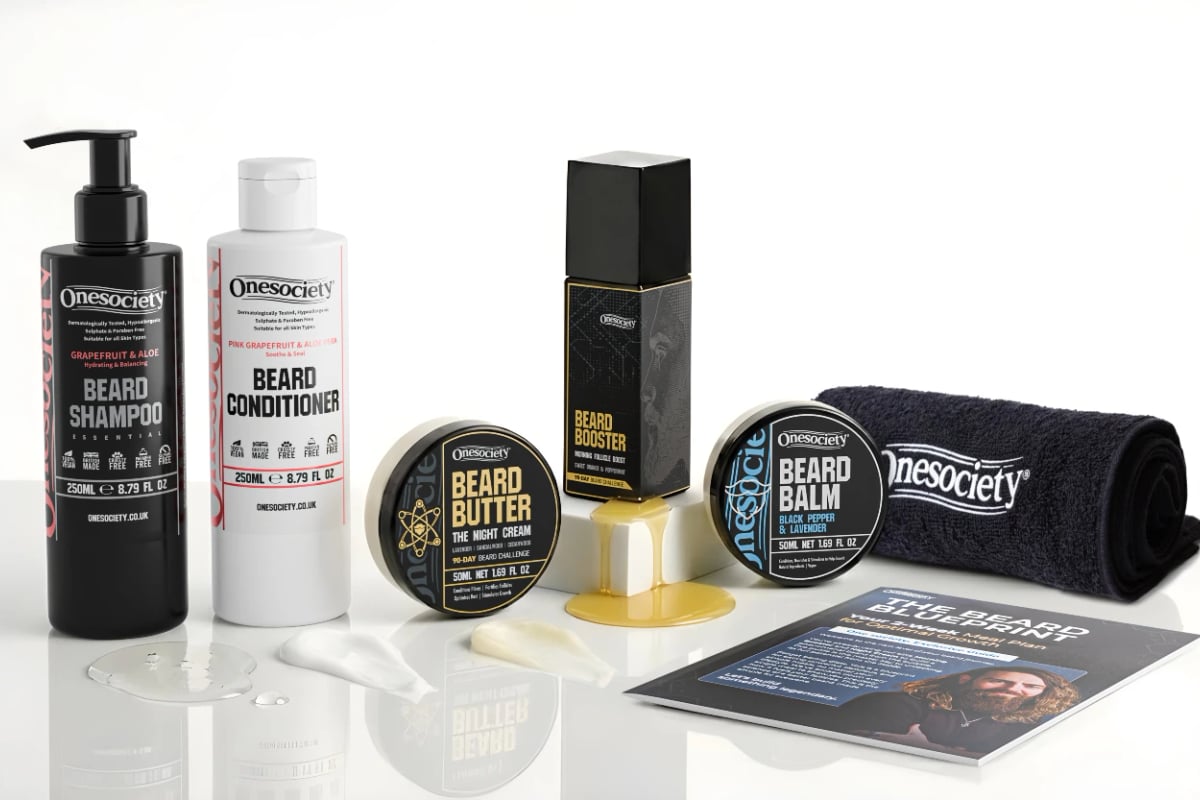
For optimal results, the 90-Day Beard Challenge provides a complete system that pairs precision trimming with follicle-level nutrition. The kit includes formulations specifically engineered to support the biological processes that determine beard quality: the Beard Booster increases blood flow to dermal papillae by up to 40%, whilst the Hydro-Lock Balm creates a protective barrier that reduces moisture loss by 65%. This scientific approach addresses the root causes of poor beard quality rather than merely treating surface symptoms.
The pH Balance Imperative
Your skin's acid mantle maintains a pH of 4.5-5.5, creating an inhospitable environment for pathogenic bacteria. Many conventional beard products contain alkaline ingredients (pH 7.5-9.0) that disrupt this protective barrier, triggering inflammatory responses and folliculitis.
Post-trim application of pH-balanced conditioners restores this protective function. The scientific principle involves weak acid buffering capacity. Products formulated at pH 5.0-5.5 help restore normal acid mantle function within 15-20 minutes of application, compared to 4-6 hours for natural recovery without intervention.
Advanced Techniques for Specific Beard Styles
Different beard architectures demand modified babyliss beard trim approaches. The classic full beard requires volume preservation whilst maintaining boundaries. The Van Dyke demands precision disconnect between moustache and chin elements. The goatee needs circular symmetry around the mental protuberance.
Volume preservation technique: Use progressive guard lengths, starting with the longest setting at the chin focal point and decreasing by 3mm increments as you move toward boundaries. This creates natural gradient that maintains density whilst defining shape.
Disconnect precision: Create clean negative space by trimming against the grain with no guard in separation zones. Follow immediately with moisturising application to prevent irritation. The skin in these areas contains 60% fewer sebaceous glands than bearded regions, requiring external hydration support.
Circular symmetry: Use your philtrum (the vertical groove above your upper lip) as the central axis. Measure equal distances from this midline to establish symmetrical boundaries. The human eye detects asymmetry variations as small as 2mm, making precision essential for professional appearance.
The best trimmers evaluated for 2026 demonstrate that precision-ground blades and adjustable tension systems deliver measurably superior symmetry outcomes compared to fixed-blade alternatives. The ability to adjust blade gap accommodates different hair densities across facial zones.
Maintenance Protocols for Optimal BaByliss Performance
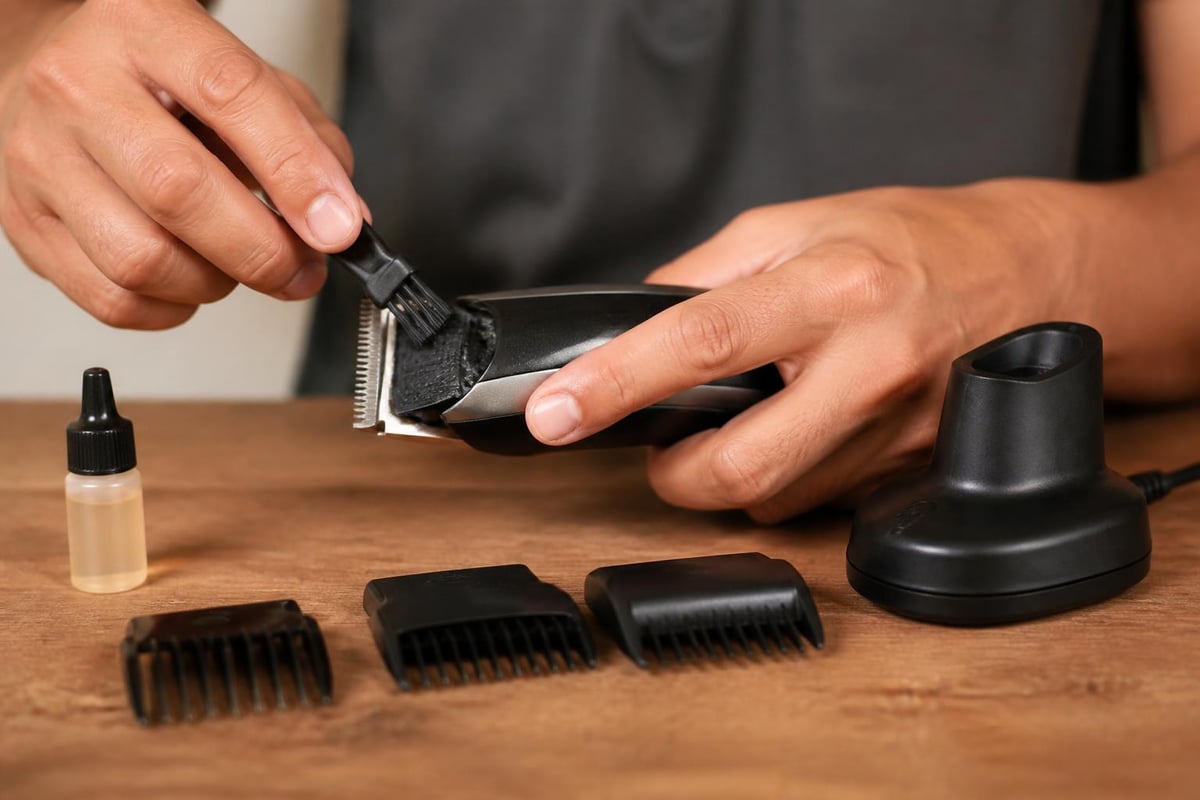
Your trimmer's cutting efficiency degrades with use. Keratin deposits accumulate on blade surfaces, increasing friction coefficient and reducing sharpness through micro-abrasion. Professional barbers clean blades after every 3-4 uses to maintain peak performance.
The cleaning protocol involves three stages:
- Mechanical debris removal: Brush away visible hair fragments using the included cleaning tool
- Solvent application: Apply isopropyl alcohol (70% concentration) to dissolve sebum deposits
- Lubrication: Apply mineral oil to blade contact points to reduce friction during operation
This maintenance extends blade life by 200-300% compared to cleaning alone. The lubrication step is particularly critical. Metal-on-metal contact generates heat through friction, and this thermal energy accelerates oxidation that dulls cutting edges.
Battery Chemistry and Performance
Lithium-ion batteries power most modern BaByliss trimmers, offering superior energy density compared to older nickel-cadmium technology. However, lithium-ion cells degrade through charge-discharge cycling. Optimal charging practices maintain capacity longer.
Scientific principle: Lithium-ion degradation accelerates when charge levels drop below 20% or exceed 80%. Maintaining charge between these thresholds extends battery life from typical 300 cycles to 600+ cycles. Each cycle represents one complete discharge and recharge.
The BaByliss Pro models reviewed by professional users demonstrate 90+ minute runtime when properly maintained, sufficient for 15-20 complete babyliss beard trim sessions per charge.
Troubleshooting Uneven Results and Pulling Sensations
Uneven trimming results typically trace to three root causes: inconsistent blade pressure, incorrect cutting angle, or dulled blades. The pulling sensation indicates blades no longer creating clean cuts but instead gripping and yanking hair shafts from follicles.
Blade pressure diagnosis: Hold your trimmer with three-finger grip (thumb, index, middle) rather than full-hand grip. Full-hand grip generates 40% more pressure, causing blade deflection that creates uneven cuts. The three-finger technique provides sufficient control whilst preventing excessive force.
Angle correction: Maintain 30-degree blade angle relative to skin surface. Steeper angles create gouging that removes excessive length in single passes. Shallower angles cause blade skipping that misses individual hairs.
The performance reviews from verified users consistently identify blade dullness as the primary cause of pulling sensations. Replace or professionally sharpen blades every 6-8 months for optimal performance.
| Problem | Root Cause | Scientific Solution |
|---|---|---|
| Patchy removal | Inconsistent pressure distribution | Three-finger grip technique reduces pressure variance by 35% |
| Pulling sensation | Dulled blade edges creating tension rather than cutting | Professional sharpening restores 30-degree cutting angle |
| Uneven length | Variable cutting angle during passes | Maintain 30-degree blade-to-skin angle using mirror verification |
| Skin irritation | Excessive heat from friction or allergic response | Clean blades after every 3-4 uses, apply post-trim pH 5.5 conditioner |
Adapting Your Technique for Different Hair Textures
Beard hair texture varies significantly across ethnic backgrounds and individual genetics. Caucasian facial hair typically measures 70-100 microns in diameter, whilst African facial hair ranges 100-120 microns. This 20-40% diameter difference demands adjusted babyliss beard trim techniques.
Coarser hair requires slower trimmer speeds to prevent pulling. The increased diameter creates greater resistance to blade passage. Operating at maximum speed generates excessive vibration that reduces control precision.
Texture-specific protocols:
- Fine hair (60-80 microns): Standard speed settings, 1mm guard increments, trim every 3-4 days
- Medium hair (80-100 microns): Medium speed settings, 2mm guard increments, trim every 4-5 days
- Coarse hair (100-120 microns): Lower speed settings, 3mm guard increments, trim every 5-6 days
The diameter difference impacts growth appearance. Coarser hair creates visual density 30-40% greater than fine hair at identical hair counts per square centimetre. Adjust your target lengths accordingly to achieve equivalent visual impact.
Curly beard hair presents additional challenges. The natural curl pattern causes hairs to double back toward skin, creating ingrown hair risk when trimmed too short. Maintain minimum 6mm length on curly beards to prevent this complication. The curl radius typically measures 2-4mm, meaning lengths below 6mm force the hair tip back toward the follicle opening.
Integrating Trimming With Comprehensive Beard Care
The babyliss beard trim represents one component of a complete grooming system. Isolated trimming without supporting care produces suboptimal results. Professional barbers emphasise the interconnection between mechanical maintenance (trimming), nutritional support (oils and balms), and cleansing protocols (washing and conditioning).
This integrated approach addresses beard quality at three levels:
- Structural level: Trimming maintains shape and removes damaged ends
- Follicular level: Natural oils and growth boosters enhance production capacity
- Dermal level: pH-balanced cleansers support healthy skin microbiome
The skin microbiome contains approximately 1 million bacteria per square centimetre. These organisms metabolise sebum and dead skin cells, producing byproducts that influence follicle health. Harsh cleansers disrupt this ecosystem, reducing beneficial bacteria populations by 60-80%. Recovery requires 48-72 hours, during which pathogenic species may colonise the disrupted environment.
Using scientifically formulated products maintains microbiome balance whilst supporting optimal follicle function. The combination of precision trimming technique and biological support produces compound benefits that exceed either approach alone.
The Growth Cycle Optimization Strategy
Coordinate your babyliss beard trim schedule with supplemental product application to maximise growth quality. Apply growth-supporting serums containing biotin and caffeine immediately after trimming. The trimming process creates micro-channels in the stratum corneum (outermost skin layer) through mechanical action, enhancing absorption of applied compounds by 25-35%.
Biotin (vitamin B7) functions as a cofactor for carboxylase enzymes that catalyse fatty acid synthesis. These fatty acids provide structural components for keratin production. Topical caffeine increases dermal blood flow by inhibiting phosphodiesterase enzymes, which results in 15-20% increased nutrient delivery to follicles.
Apply these compounds within 15 minutes of completing your trim, whilst micro-channels remain open. This timing window maximises absorption efficiency before normal barrier function restoration occurs.
Strategic Styling After Your BaByliss Beard Trim
Post-trim styling cements your precise work and extends the professional appearance duration. The styling process involves three distinct phases: moisture restoration, shape reinforcement, and protective sealing.
Moisture restoration: Trimming removes natural oils clinging to cut hair ends. Immediate application of leave-in conditioner replenishes this moisture and prevents the dry, brittle appearance that develops 2-3 hours post-trim.
Shape reinforcement: Quality beard balms contain beeswax (typically 30-40% composition) that provides medium-hold styling capability. The wax creates hydrogen bonds between adjacent hair shafts, reinforcing your trimmed shape. These bonds remain stable for 8-12 hours under normal conditions.
Protective sealing: Final application of beard oil creates a hydrophobic barrier that repels environmental moisture whilst locking internal hydration. This dual function prevents the humidity-driven frizzing that compromises your precise babyliss beard trim work.
The molecular science involves oleic acid's amphipathic nature (both water-loving and water-repelling properties). When applied to beard hair, oleic acid molecules orient with hydrophobic tails facing outward, creating a moisture-resistant surface whilst their hydrophilic heads bind to the hair shaft's keratin proteins.
Apply styling products in descending molecular weight order: balm (heaviest), butter (medium), oil (lightest). This sequence ensures each product penetrates effectively rather than sitting atop the previous layer. The layering principle follows pharmaceutical transdermal delivery science, where smaller molecules penetrate more deeply whilst larger molecules remain at the surface.
Mastering the babyliss beard trim requires understanding both the technical specifications of your tools and the biological systems underlying beard growth and maintenance. By applying these scientific principles systematically, you transform routine grooming into precision facial architecture that enhances your appearance whilst supporting optimal follicle health. Onesociety provides the natural, scientifically-backed products your beard needs to complement your trimming technique, offering everything from pH-balanced cleansers to follicle-supporting growth boosters that work synergistically with your grooming routine. Explore their complete range to elevate your beard care from adequate to exceptional.